
Materials · 5 MIN READ
Yellow gold, white gold, platinum or rose gold: how to choose
The right metal is the one that suits your style, the design and the way you will wear it. Compare yellow gold, white gold, platinum and rose gold by more than color: ask about the specific alloy, finish, upkeep, comfort and compatibility with your other jewelry.
Published September 23, 2026
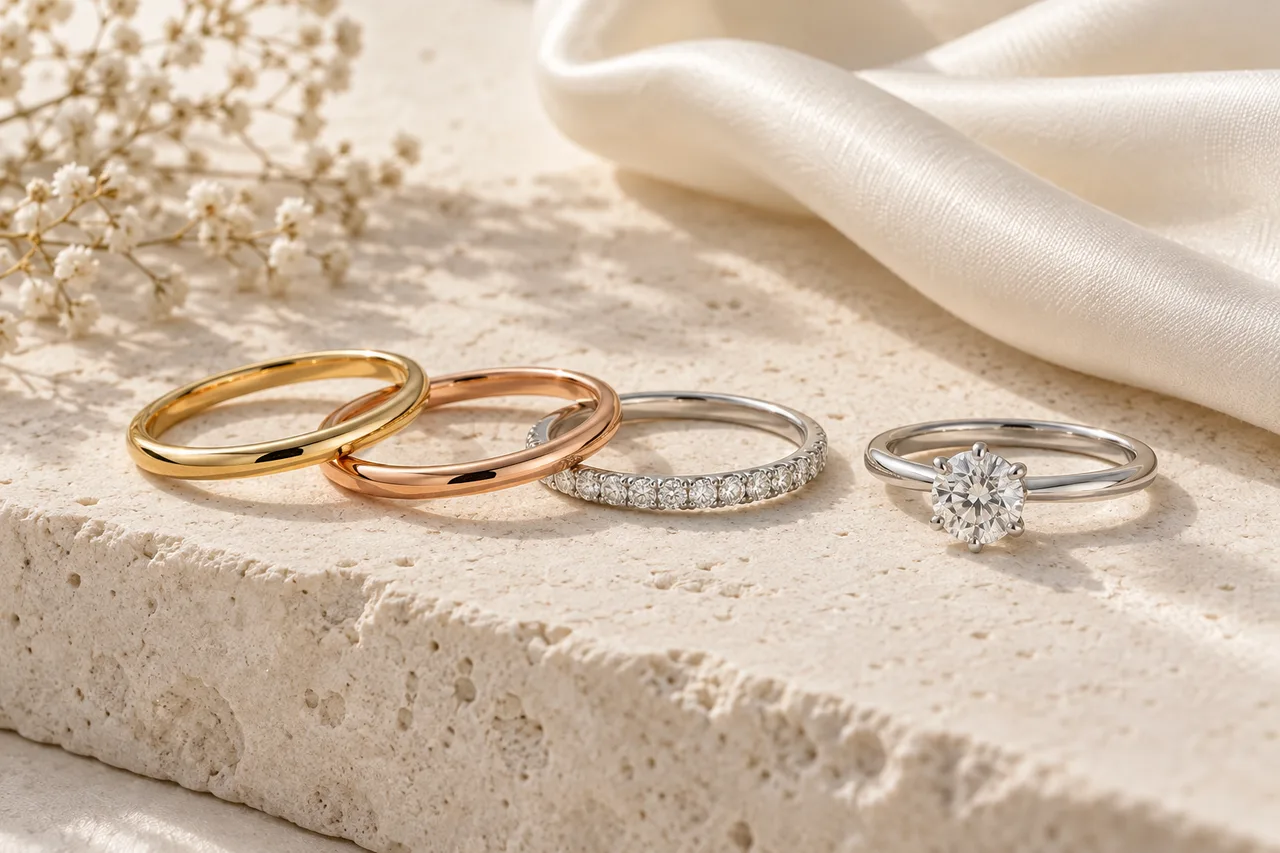
Compare the four options
Begin by trying comparable designs in different metals. If one ring is wide and another is delicate, you may be reacting to the shape rather than the material. Compare the color against your skin and beside jewelry you already wear, then look at the same combination in different lighting.
There is no requirement to choose a particular metal for a skin tone or to make partners’ rings identical. Notice which option you keep returning to. A shared detail, finish or inscription can connect two bands even when their colors differ.
Yellow gold: warmth and a visible metal presence
Yellow gold gives the ring a warm outline that can become part of the design’s character. Jewelry gold is commonly alloyed with other metals because pure gold is relatively soft. The particular alloy and karat influence its appearance and properties; “yellow gold” does not describe every detail of a finished piece.
Try it with the actual gemstone whenever possible. Decide whether you like the contrast between the stone and metal, and ask about the color of the setting around the stone as well as the band. If you already wear yellow-gold jewelry, bring a piece to compare. Two pieces with the same broad metal description need not have precisely the same shade.
White gold: understand the finish
White gold is gold alloyed to produce a paler color and is often plated with rhodium for a bright white surface. Ask whether the specific ring is plated and what happens as that finish wears. The underlying alloy may show a different tone, so discuss how the original appearance can be refreshed.
Do not assume a fixed replating schedule applies to every wearer. Ask what signs to look for and how your design and habits could affect maintenance. If you prefer to let a finish evolve rather than refresh it regularly, say so before choosing. A white appearance also does not tell you whether the alloy contains nickel; that needs its own question.
Platinum: naturally white, with a different feel
Platinum offers a naturally white color. Common platinum jewelry alloys are denser than common gold jewelry alloys, so rings of similar dimensions typically feel heavier. Try a finished ring rather than judging that difference from a photograph. The shape and dimensions still matter: a slim platinum ring and a wide gold band are not a controlled comparison.
A naturally white metal is not a promise that a polished surface will stay pristine. Ask how the chosen platinum alloy and finish will look as they acquire wear, whether you like a softer worn appearance and what refinishing involves. Discuss the setting’s construction as carefully as its metal name.
Rose gold: compare the actual shade
Rose gold gets its pink or reddish tone from copper-containing gold alloys. The shade varies, so compare samples rather than assuming every rose-gold piece will match. It can provide a warm contrast beside white metal or blend gently with other warm-colored jewelry.
If you are considering it for a custom piece, ask how the proposed finish will affect the look. A polished surface and a softer texture can give the same color a different character. Make sure the preference belongs to the person wearing the jewelry; a gift does not need to follow a color trend to feel thoughtful.
Karat, durability and everyday wear
Karat describes gold purity; it is different from the carat used for gemstone weight. A higher karat is not automatically the best choice for every ring. Ask how the proposed alloy supports the design, especially if the band is delicate or the stone setting has exposed details.
No choice here is scratch-proof or maintenance-free. Ring thickness, setting construction and wearing habits influence the finished piece’s performance. Explain your daily routines and ask when the ring should be removed. A jeweler can discuss the actual design; broad claims that one metal is always strongest or always lasts longest are less useful.
Ask what is needed to preserve the finish and inspect the setting. Cleaning advice must also suit the gemstones, treatments and construction, not only the metal. Keep any written care guidance with the description of the piece.
Skin sensitivities and comfort
If you have a known reaction to a metal ingredient, tell the jeweler and request information about the specific alloy. GIA notes that people allergic to nickel should avoid white gold alloyed with nickel. Do not assume a metal’s color, a plating layer or a general “hypoallergenic” label answers every question about its composition.
Comfort also comes from the ring’s width, interior profile and edges. Try it on the intended finger and consider the full stack if you will wear several rings together. A material that looks right still needs to feel right in the finished shape. Seek medical advice for an actual skin reaction rather than guessing at its cause from the ring’s appearance.
Pairing, resizing and future changes
Bring an existing engagement ring or wedding band when choosing its companion. Matching colors alone does not establish compatibility. Ask a jeweler to inspect how the rings touch, whether settings may rub and how the whole combination will fit. Mixed-metal styling can be attractive, but it still needs a practical assessment.
Ask whether the specific ring can be resized and which design features limit that option. A continuous arrangement of stones, unusual construction or a mixed-metal design may need a different approach from a plain band. For future alterations, knowing the original alloy is useful; keep that information with your records.
Before making the decision, confirm the metal, karat or purity information, alloy details supplied, finish, plating if any and care expectations. Bring your favorites to West Coast Diamond & Gem in Seattle to discuss the options for your piece. Choose the combination you enjoy wearing and understand how to look after.