
Gemstones · 3 MIN READ
Choosing a colored gemstone engagement ring
Choose a colored gemstone for the color you love and the way you intend to wear the ring. Then discuss the individual stone’s durability, treatments and setting with a jeweler. A gemstone name alone cannot answer every question about daily wear.
Published September 23, 2026
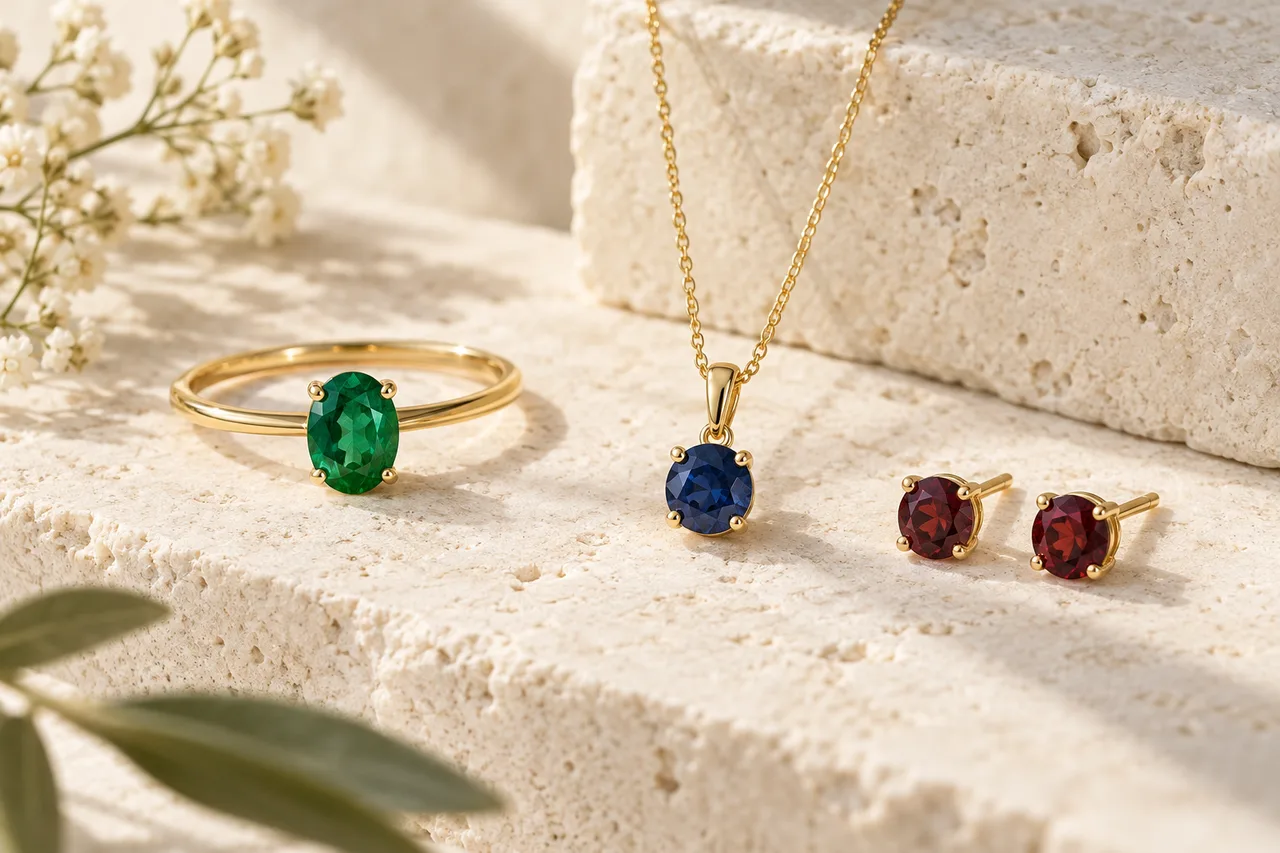
Describe your color before choosing a name
Start with the appearance you want: a deep blue, a soft green, a vivid warm tone or something less expected. Bring a few references, but remember that a screen can shift color. Ask to see the actual stone and notice how its appearance changes with lighting and viewing angle.
Compare it against the proposed metal color. The setting becomes part of what you see, so a stone viewed loose on a white background may create a different overall impression in a finished ring. Take notes about what appeals to you rather than relying entirely on a photograph.
Discuss durability as more than hardness
Hardness concerns resistance to scratching. Toughness describes resistance to breaking or chipping; stability concerns resistance to heat, light and chemicals. These properties cannot be reduced to a hardness ranking. Ask about the particular stone, including its condition and any treatments, in relation to everyday wear.
Ruby and sapphire are commonly considered for engagement rings, but the finished design and care still matter. A setting cannot make a stone indestructible. Explain your routines honestly and ask which activities would call for removing the ring.
Ask clear questions about identity and treatment
Request the gemstone’s identity, whether it is natural or laboratory-grown, and disclosure of known treatments. Ask whether a report is available, what it covers and which questions it leaves unanswered. Do not assume an attractive color or a romantic trade name provides that information.
Treatments can affect care. For example, GIA’s sapphire guidance distinguishes cleaning considerations for different treatment types. Ask for written instructions that apply to the actual stone you select. Store that information with your jewelry records so future cleaning or repair discussions start with the right facts.
Choose a setting for this stone
Consider the outline, exposed corners, setting height and how the ring will sit beside a wedding band. Ask a jeweler to explain the protection and support appropriate to your chosen gem. If an inspiration image uses a different stone, discuss whether its design is a useful reference for your project.
View the complete combination before final approval whenever the project allows: stone, metal, band and neighboring ring. A colorful center can be the focus of a restrained design or part of a more detailed composition. Neither approach needs to imitate a diamond solitaire.
Bring your color ideas and daily-wear questions to West Coast Diamond & Gem in Seattle. Contact the studio to discuss precious stones and custom jewelry options for your project. Availability and suitability should be confirmed for the specific stone and design you have in mind.