
Colored gemstones · 3 MIN READ
Choosing a sapphire: color, treatments and everyday wear
The right sapphire starts with a color you want to keep looking at. Then come the details that make the choice informed: how the stone looks in different lighting, whether it has been treated, and whether the design suits the way it will be worn.
Published September 23, 2026
Begin with color, without stopping at blue
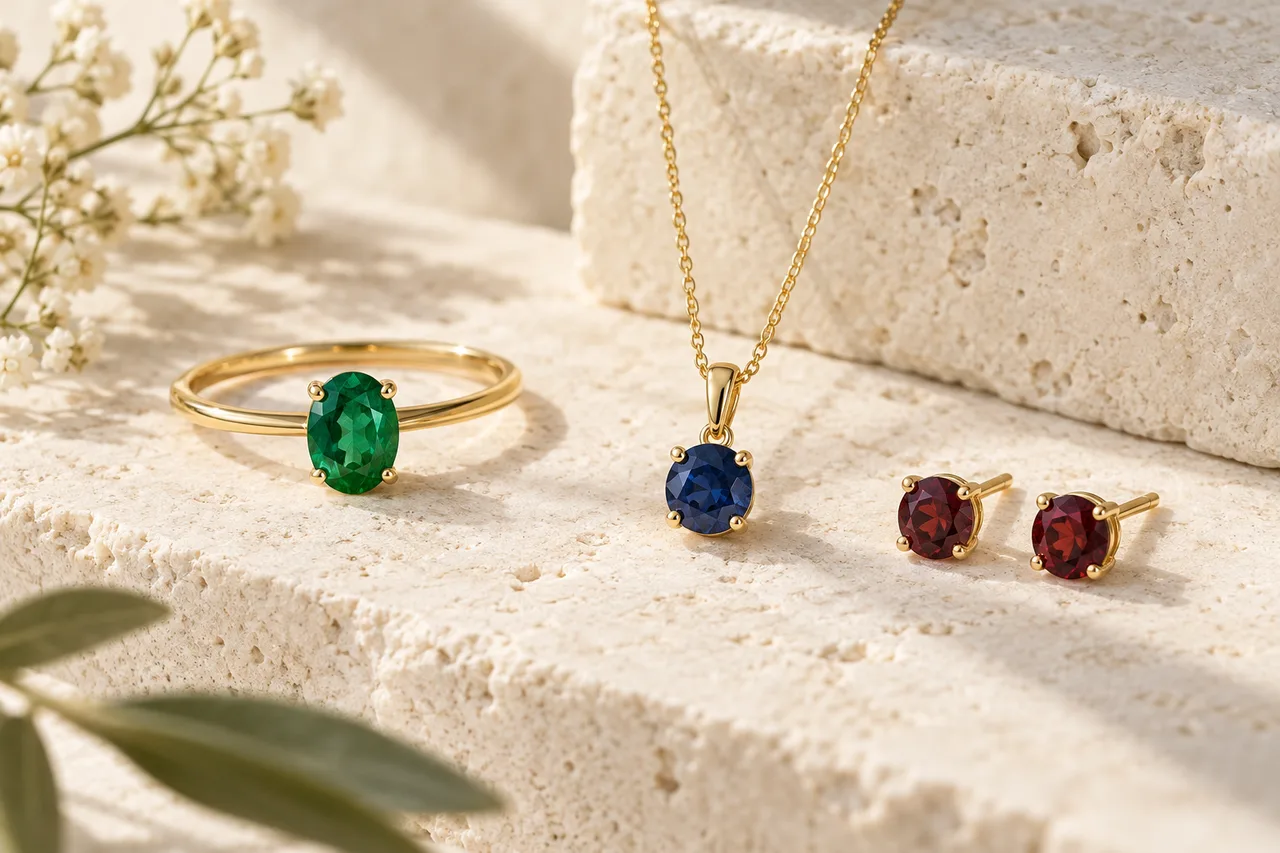
Sapphires occur in many colors beyond blue, including pink, yellow and green. Hue describes the color family, tone its lightness or darkness, and saturation its intensity. Color zoning can make parts of a stone look different from other parts.
Start by collecting a few examples you enjoy, then compare actual stones. A vivid photograph is a useful conversation starter, not an exact color standard. Notice whether the stone still appeals to you when it is tilted and when the lighting changes.
Ask about origin and treatments separately
Ask whether the sapphire is natural or laboratory-grown, and ask separately about treatments. Heating is common. Other treatments, including lattice diffusion or fracture filling, require their own explanations; they are not interchangeable with ordinary heating.
Request the seller’s description in writing. If a stone is described as unheated, ask what supports that statement. Treatment information helps you understand what you are buying and which care advice applies.
Understand what the laboratory report covers
A colored-stone report may identify the material, natural or laboratory-grown origin and detectable treatments. Some reports offer an opinion on geographic origin when the laboratory can reach one. GIA does not assign an overall sapphire quality grade like a diamond’s color or clarity grade.
Ask what the particular report does and does not conclude. Do not treat a geographic name as proof that a sapphire will have your preferred color, or that it is the best choice for your design.
Plan for the setting and care
Sapphire is relatively resistant to scratching, but a finished jewel is not immune to chips, damaged settings or treatment-related care needs. Discuss exposed edges, mounting height and the kind of knocks a ring might encounter.
GIA recommends warm soapy water as a safe cleaning approach for sapphire, but filled or dyed stones need special care. Ask for cleaning instructions for the exact stone and setting. Do not assume an ultrasonic or steam cleaner is suitable for every sapphire piece.
Build a personal brief for your Seattle visit
Bring a preferred color range, examples of settings and a description of when you expect to wear the piece. For a gift, consider whether the recipient would prefer a ring, pendant or earrings before committing to a stone.
Make room to be surprised by the stones themselves. You might prefer a softer blue, a mixed-color appearance or a shape you had not considered. Contact our downtown Seattle studio to discuss your idea and the options for your project.