
Design details · 3 MIN READ
Diamond shapes and settings: choose them together
A diamond’s shape gives the ring its outline; the setting determines how that stone is held and presented. Choose them together. The same stone shape can feel delicate, architectural or traditional in different settings.
Published September 23, 2026
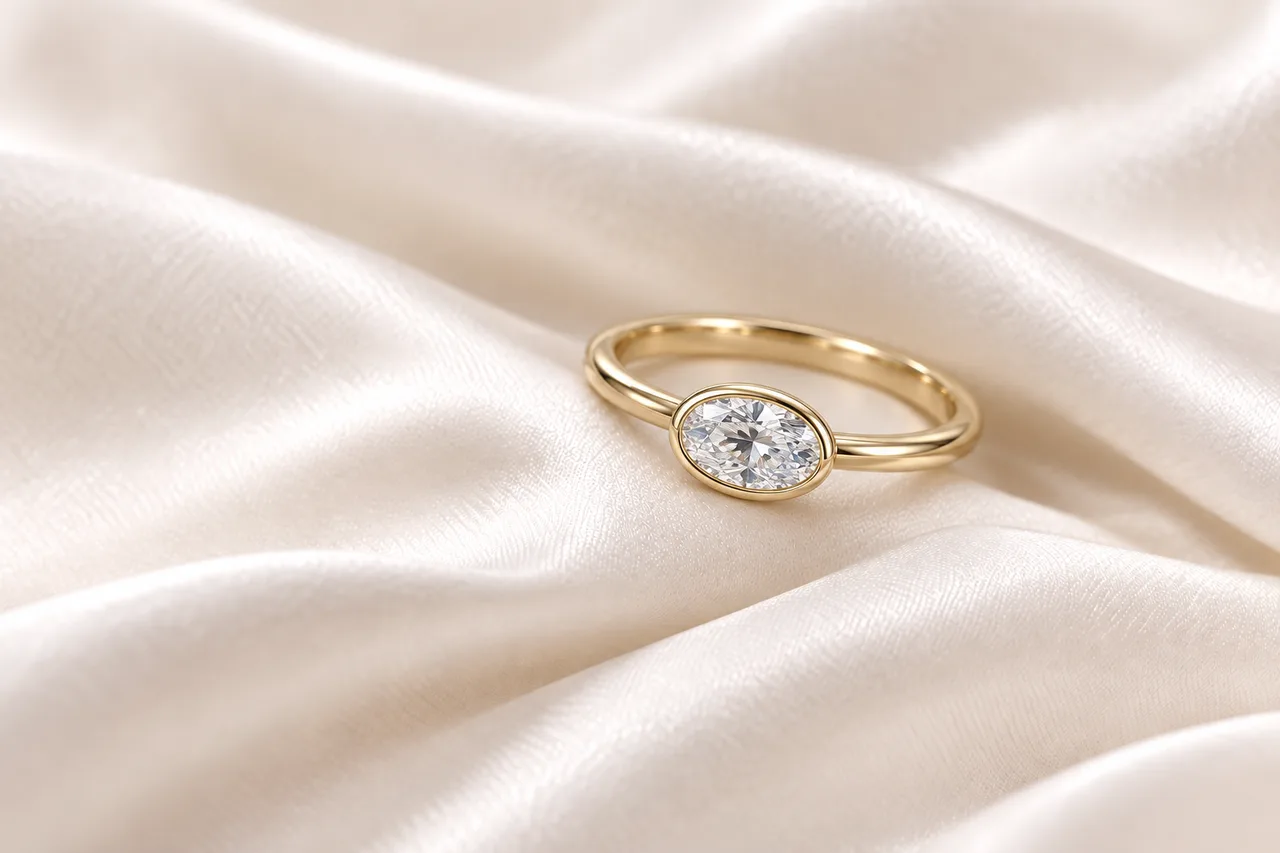
Begin with the outline you enjoy
Round, oval, pear, marquise and emerald-cut diamonds create different silhouettes. An elongated outline gives a different impression from a round one even when the rings share the same metal and band. Try the shapes on your hand, or view a representative ring, before relying only on enlarged product photographs.
Write down what attracts you without trying to select the “correct” shape for your fingers. You may prefer a balanced, centered outline or an asymmetrical point. Consider whether you enjoy the shape both at arm’s length and close up. A preference that survives both views is useful guidance.
Distinguish setting from style
Prongs use small metal supports to hold a stone. A full bezel surrounds the stone with a rim of metal; a partial bezel leaves sections of the edge exposed. These describe methods of securing a gem. Terms such as solitaire, halo and three-stone describe aspects of the overall design, so they are not always alternatives in the same category.
Ask which combinations are suitable for the actual stone you are considering. A design photograph may hide the supporting structure underneath. View the side and underside, and ask the jeweler to explain how the stone is held and which areas will need attention over time.
Check the details that photographs miss
Inspect the ring’s height, the transition from the band to the center setting and how the underside feels on your finger. Think about putting on a sweater or wearing gloves. Ask how the design balances the presentation of the stone with your routines rather than assuming any setting is maintenance-free.
For pointed shapes, ask how the vulnerable tips are protected. For any ring, ask how you would notice a loose stone or worn setting and what to do if something catches unexpectedly. These questions are about understanding the piece, not finding a design that never needs care.
Compare combinations with a simple shortlist
Try changing one major feature at a time: keep the outline and compare settings, or keep the setting style and compare outlines. This makes it easier to identify what is changing your reaction. Take notes about your favorites so a later conversation does not depend on memory alone.
If you plan to add a wedding band, try the combination before finalizing the engagement ring. Look at the gap, the total width and the way the rings touch. Your favorite design should make sense as a complete piece on your hand. Bring your shortlist to a custom design conversation if you have found elements you love but have not yet found the combination.