Diamonds · 4 MIN READ
10 diamond cuts and shapes: a visual guide
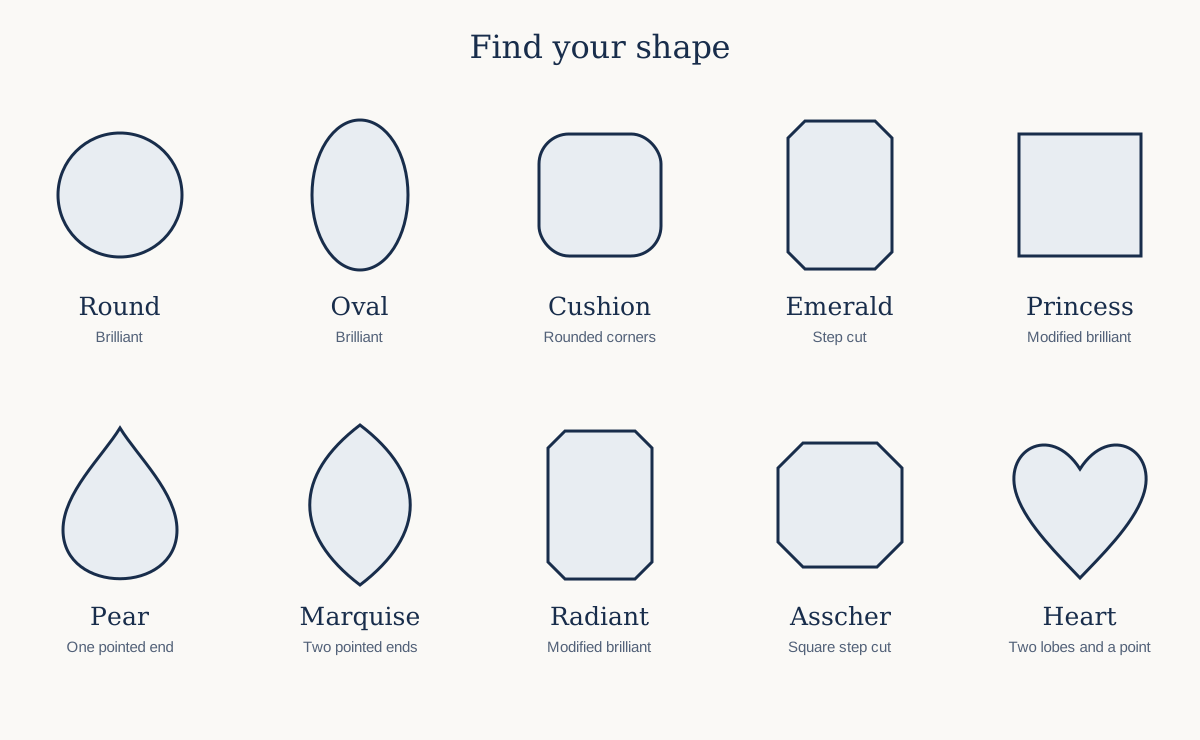
Round or oval? Cushion or emerald? These ten familiar diamond shapes offer very different personalities. Use this visual guide to find a few you are drawn to, then compare actual stones in settings. This is a selection to explore, not a ranking of quality or sales.
Published September 23, 2026
Shape and cut are related, but different
Shape describes a diamond’s outline when viewed from above. Cut style describes the arrangement of its facets. In everyday conversation, “diamond cuts” often refers to both. An emerald cut and an Asscher cut have step-style facets; many other familiar shapes use brilliant-style arrangements.
The illustration is a visual starting point, not a grading diagram. Compare the actual stones you are considering rather than expecting every diamond with the same name to look identical.
1. Round brilliant
A circular outline gives this classic shape an even, centered appearance. If you are not yet sure what you prefer, a round solitaire makes a useful starting point for comparison. Try it next to an elongated shape and note whether you miss the round’s symmetry or prefer the longer outline.
2. Oval
An oval stretches the rounded outline into a longer silhouette. Compare a fuller oval with a narrower one rather than treating all ovals as the same look. Turn the ring on your hand and view it from your usual distance. Ask to see the stone in different lighting and discuss any dark area that catches your attention.
3. Cushion
Cushion shapes combine a square or rectangular outline with rounded corners. Some feel compact; others are distinctly elongated. Decide which outline you enjoy before selecting a setting. If the soft corners are what drew you in, ask how the proposed setting will keep that character visible.
4. Emerald cut
An emerald cut typically has an elongated outline, clipped corners and step facets. Its organized geometry can appeal to someone who enjoys clean lines. Compare actual stones slowly and look across the face of each one. Ask the jeweler to explain what you notice rather than applying expectations formed by a brilliant-cut diamond.
5. Princess
A princess cut is usually square, though rectangular versions exist, with pointed corners and a modified brilliant facet pattern. It can be a starting point if you want a crisp shape without the elongated look of a rectangle. Discuss how the setting will support and protect the corners, and try the finished outline beside a wedding band.
6. Pear
A pear brings a rounded end and a single point together. Try different orientations rather than assuming the point must face one way. Notice whether the design still appeals when your hand is relaxed. Ask how the point will be protected and how a neighboring band would sit beside the shape.
7. Marquise
The marquise has an elongated outline with a point at each end. Compare wearing it lengthwise with an east-west orientation if the design allows. That change can alter the ring’s character substantially. Ask about protection at both ends and consider the complete setting’s width and height.
8. Radiant
Radiant cuts combine a square or rectangular outline with clipped corners and brilliant-style facets. Try one alongside an emerald cut if you like a rectangular silhouette but are undecided about the visual pattern inside it. Keep the setting simple during the comparison so you can focus on the stones.
9. Asscher
An Asscher cut is generally square with clipped corners and step facets. Compare it directly with a princess or cushion if you know you prefer a compact outline. Think about whether the geometric center should stand alone or be accompanied by details that repeat its lines.
10. Heart
The heart shape has two lobes, a central notch and a pointed end. If its symbolism appeals to you, check how clearly you can read the shape at a normal viewing distance. Ask how the setting will preserve the outline while securing the stone, rather than judging only a magnified photograph.
Narrow the choice to what you love seeing
Choose a few shapes from the chart and save a note about what appeals to you in each. Is it a soft outline, precise geometry or an unusual orientation? Compare the finalists on your hand and in the type of metal you are considering.
Ask about the individual stone’s documentation, appearance and suitable settings. A preferred shape is a starting point for the ring, not a substitute for evaluating the diamond itself. Bring your shortlist to West Coast Diamond & Gem in Seattle to discuss engagement rings and custom design options.